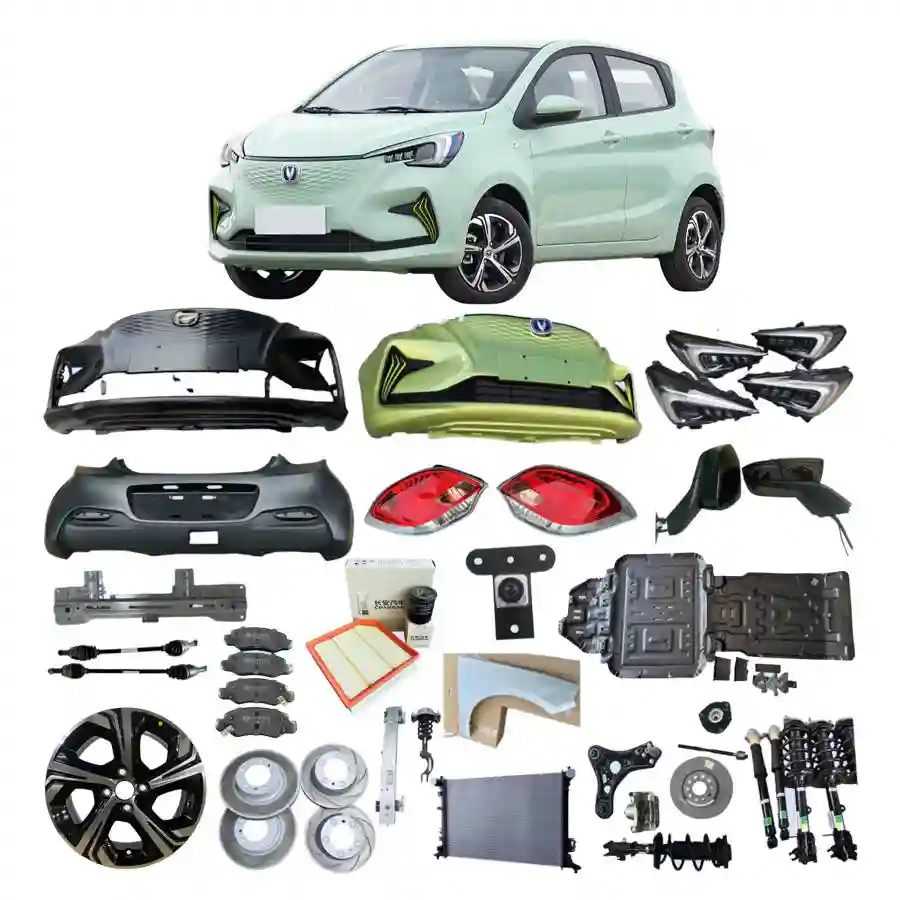
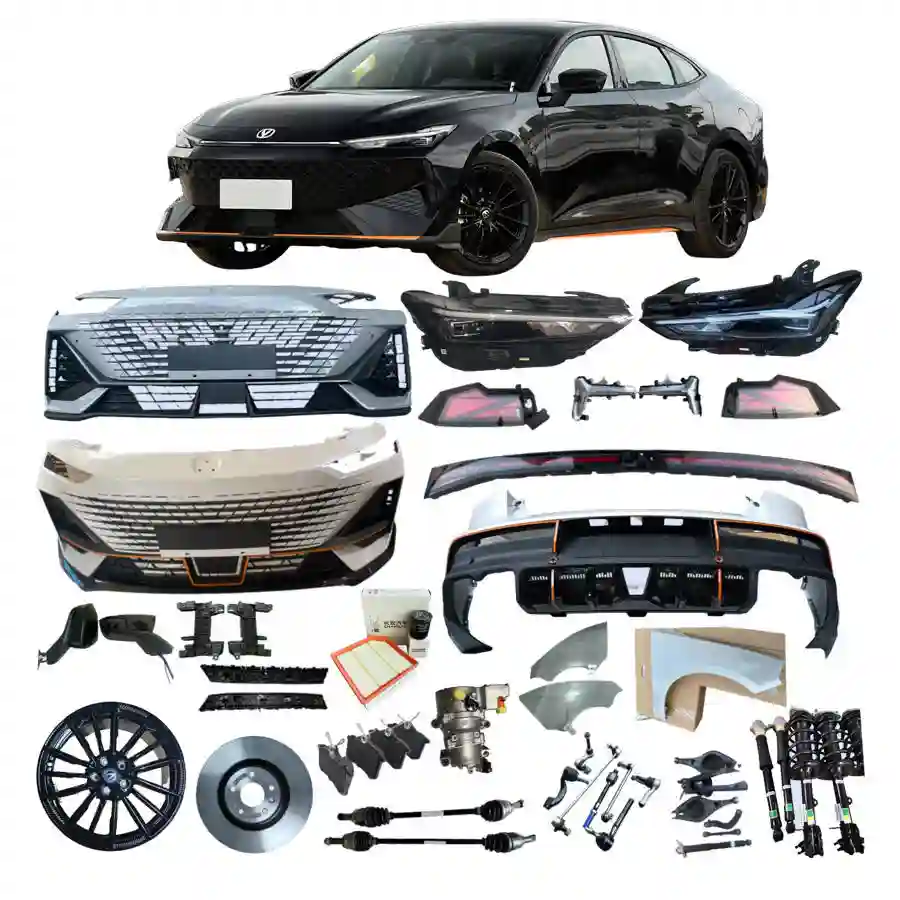
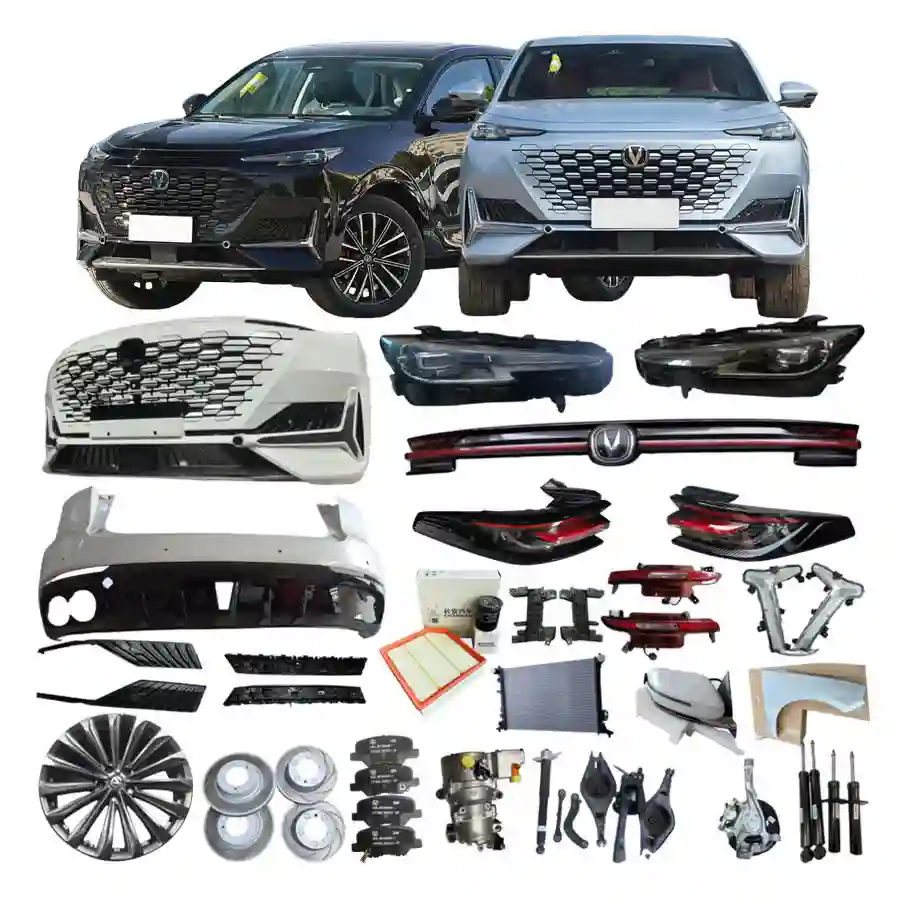
Changan UNI-V Parts Wholesale: What Actually Sells, What to Skip, and the OE Numbers That Matter
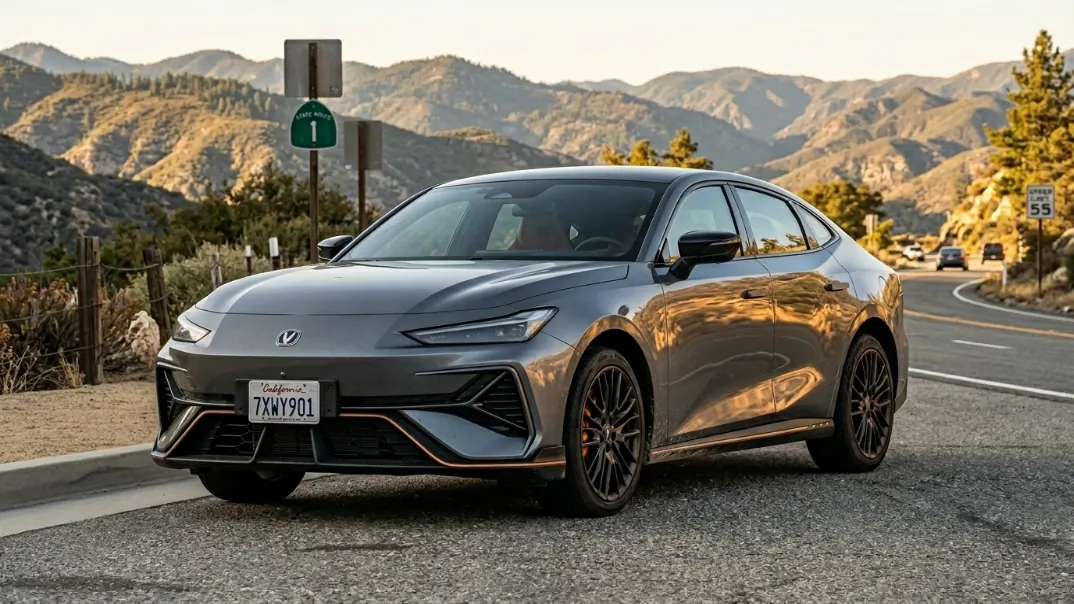
Changan UNI-V Parts Wholesale: What Actually Sells, What to Skip, and the OE Numbers That Matter
Straight talk for distributors: which UNI-V parts move fast, which ones eat warehouse space, and the fitment traps that cost you money. Real OE numbers, real container math, no fluff.
COVER
- 1st Gen (2022–2023) and Facelift (2023–2024) UNI-V exterior and fast-moving service parts
- Verified OE numbers for body, lighting, mirrors, brakes, and cooling
- What to stock vs. what to source on order, based on actual turnover
- The fitment mistakes that cause returns,Send your VIN to confirm exact fitment before ordering.Email:info@yurunglobal.com | WhatsApp: +86 173 0024 2360
- OEM vs. aftermarket call for each part type
- 40HQ loading numbers and packaging reality
- Where demand is actually coming from (Middle East, CIS, LatAm, SEA)
DOES NOT COVER
- 2nd Gen (2024+) full breakdown — front end is completely different, contact us for those numbers
- Interior, suspension, or electronics
- Retail pricing
- How to install anything
The UNI-V Aftermarket Is Heating Up
If you're reading this, you probably already know: UNI-V exports are everywhere now — Middle East, Central Asia, Russia, Latin America. The first batch of cars sold in 2022–2023 is coming out of warranty, and repair shops are starting to call. Here's the problem: UNI-V has three different front ends floating around, and the parts don't swap. A distributor who ships the wrong bumper doesn't just lose a sale — they eat return shipping on a 1.8-meter box. This guide is built from what we've learned moving these parts in volume: what actually sells, what sits on the shelf for six months, and the OE numbers you need to quote with confidence.
Know Your Generations Before You Stock Anything
UNI-V launched in 2022 and has already been facelifted twice. If a customer says "I need a front bumper for a UNI-V," your first question should be: which year? 2022–2023 (1st Gen): Original face, full-width rear light bar, 1.5T and 2.0T engines. 2023–2024 (Facelift): Same shell, revised grille pattern and bumper shape. Front-end parts are mostly different from 1st Gen. 2024+ (2nd Gen): New headlights, new grille, new bumper geometry. Nothing from the earlier cars fits. The expensive mistake: A 2022 headlight will not bolt into a 2024 car. The mounting tabs moved. A 2024 grille on a 2022 car leaves an 8mm gap on each side and the DRL won't plug in. Always confirm the year and, if possible, the VIN before you quote front-end parts. Side parts — doors, fenders, mirrors — mostly carry over across 1st Gen and Facelift. But mirror caps and trim strips can vary by trim level, so don't assume.
What to Actually Keep in Stock
There's no magic list that works for every market. A distributor in Jeddah running collision parts for a fleet of UNI-V taxis needs a completely different profile from a mixed-brand importer in Lima who gets two UNI-V orders a month. That said, after moving these parts for a few years, here's what we've seen move consistently.
The Parts That Turn Fast
Front-end stuff is where the money is. Front impacts are the most common repair, and shops hate placing three orders for one job. If you can sell the bumper, grille, brackets, and trim in one shot, you win the order.
| Part | OE | Notes |
|---|---|---|
| Front Bumper Upper Body | C281F271301-1501 | ~1.8m long, ships boxed |
| Front Bumper Lower Body | C281F271301-1400 | Often ordered with upper |
| Front Bumper Upper Grille | 2803130-DE02 | Sport has bigger opening |
| Front Bumper Lower Grille | 2803121-DE05 | Small, easy to store |
| Front Bumper Trim | C281F271301-2200 | Good margin add-on |
| Front Bumper Bracket | C281F271301-0400 | Replace every time with cover |
| Engine Hood Cable | C281F270602-0100 | Cheap, high turnover |
Lighting moves almost as fast as bumpers. Headlights get cracked, fog lamps get ripped off in parking lot scrapes.
| Part | OE | Notes |
|---|---|---|
| Headlamp Assembly | 4121010-DE01 / 4121020-DE01 | Check halogen vs. LED by VIN |
| Headlamp Lower Trim | 4133010-DE01 / 4133020-DE01 | Usually ordered with lamp |
| Headlamp Upper Bracket | 4133210-DE01 / 4133220-DE01 | Small, high-margin |
| Fog Lamp | 4116110-DE01 | Often overlooked, good stock item |
| Taillight Assembly | 2809100-DE02 / 2809200-DE02 | Full-width design |
Mirrors are a constant. Urban driving in export markets means mirror hits are everyday repairs.
| Part | OE | Notes |
|---|---|---|
| Side Mirror Assembly | 8202100-DE04 / 8202200-DE05 | Check power-fold vs. manual |
| Mirror Base / Mount | 7917130-DE02 / 7917140-DE02 | Usually damaged in same hit |
Brakes and filters are your repeat business. A shop buys brake pads once, they'll be back in 30,000–60,000 km.
| Part | OE | Notes |
|---|---|---|
| Front Brake Pad Set | 3501101-PT01 | Semi-metallic or ceramic — confirm by market |
| Rear Brake Pad Set | 3502101-PT01 | Same compound issue as front |
| Front Brake Disc | 3501180-MK01-DE01 | Vented |
| Rear Brake Disc | 3507140-MK01-DE01 | Check solid vs. vented |
| Oil Filter | 1000263-NE01 | All engines |
| Air Filter | 1002050-NE01 | All engines |
The Parts You Should Think Twice About
These have demand, but they eat space and capital. Only stock them if you have the floor space and you know your market. Hood (8403100-DE01 / 8403200-DE01): Big, expensive, and you need two SKUs (color-matched or primer). Good turnover in fleet markets, slow everywhere else. Trunk Lid (8402100-DE01): Same story. Rear-end collisions happen, but not as often as front hits. Complete Doors: Massive. Most distributors stock door shells or source complete doors to order. If you have a body shop customer who orders regularly, maybe keep one or two. Rear Bumper Upper/Lower (C281F271303-1000 / 1300 / 1400): Moderate demand. The lower body gets hit in parking scrapes, so it moves faster than the upper. The Parts You Should Never Stock Without a Buyer Engine assemblies (1001660-PT02, 1001770-PT01, 1001550-PT01): High value, VIN-specific, and if you guess wrong you're stuck with a $2,000 paperweight. A/C Compressor (8103100-MK03): Expensive and the belt routing varies by engine. Source to order. Quarter panels, roof panels, subframes: Too big, too slow, too specific.
The OE Number Reference You Can Actually Use
The OE numbers below come from multiple supplier catalogs. In practice, the same part often shows up under two or even three different numbers — for example, the front bumper upper body is listed as both C281F271301-1501 and 2803110-DE02. That's normal. If your customer gives you one number and you have another, check the description and year range; they usually point to the same part.
Body & Exterior
| Part | OE | Position | Year |
|---|---|---|---|
| Front Bumper Upper Body | C281F271301-1501 | Front | 2022–2023 |
| Front Bumper Lower Body | C281F271301-1400 | Front | 2022–2023 |
| Front Bumper Upper Grille | 2803130-DE02 | Front | 2022–2023 |
| Front Bumper Lower Grille | 2803121-DE05 | Front | 2022–2023 |
| Front Bumper Trim | C281F271301-2200 | Front | 2022–2023 |
| Front Bumper Bracket | C281F271301-0400 | Front | 2022–2023 |
| Rear Bumper Upper Body | C281F271303-1000 | Rear | 2022–2023 |
| Rear Bumper Lower Body | C281F271303-1300 | Rear | 2022–2023 |
| Rear Bumper Trim | C281F271303-1400 | Rear | 2022–2023 |
| Hood / Bonnet | 8403100-DE01 | Front | 2022–2023 |
| Trunk Lid | 8402100-DE01 | Rear | 2022–2023 |
| Front Fender Left | 6101100-DE01 | Front Left | 2022–2024 |
| Front Fender Right | 6101200-DE01 | Front Right | 2022–2024 |
| Engine Hood Cable | C281F270602-0100 | Front | 2022–2024 |
Lighting
| Part | OE | Position | Year |
|---|---|---|---|
| Headlamp Assembly Left | 4121010-DE01 | Front Left | 2022–2023 |
| Headlamp Assembly Right | 4121020-DE01 | Front Right | 2022–2023 |
| Headlamp Lower Trim Left | 4133010-DE01 | Front Left | 2022–2023 |
| Headlamp Lower Trim Right | 4133020-DE01 | Front Right | 2022–2023 |
| Headlamp Upper Bracket Left | 4133210-DE01 | Front Left | 2022–2023 |
| Headlamp Upper Bracket Right | 4133220-DE01 | Front Right | 2022–2023 |
| Fog Lamp | 4116110-DE01 | Front | 2022–2023 |
| Taillight Assembly Left | 2809100-DE02 | Rear Left | 2022–2023 |
| Taillight Assembly Right | 2809200-DE02 | Rear Right | 2022–2023 |
Mirrors
| Part | OE | Position | Year |
|---|---|---|---|
| Side Mirror Assembly Left | 8202100-DE04 | Left | 2022–2023 |
| Side Mirror Assembly Right | 8202200-DE05 | Right | 2022–2023 |
| Mirror Base / Mount Left | 7917130-DE02 | Left | 2022–2023 |
| Mirror Base / Mount Right | 7917140-DE02 | Right | 2022–2023 |
Braking
| Part | OE | Position | Notes |
|---|---|---|---|
| Front Brake Pad Set | 3501101-PT01 | Front Axle | Confirm compound by market |
| Rear Brake Pad Set | 3502101-PT01 | Rear Axle | Confirm compound by market |
| Front Brake Disc | 3501180-MK01-DE01 | Front Axle | Vented |
| Rear Brake Disc | 3507140-MK01-DE01 | Rear Axle | Check solid/vented by variant |
Cooling & Service
| Part | OE | Notes |
|---|---|---|
| A/C Condenser | 8105100-DE02 | Parallel flow, critical in hot climates |
| A/C Compressor | 8103100-MK03 | Shared with UNI-T / UNI-K |
| Oil Filter | 1000263-NE01 | All engines |
| Air Filter | 1002050-NE01 | All engines |
| Cabin Filter | 1011080-NE01 | All engines |
Fitment Traps That Cost You Money
We've seen distributors lose money on all of these. Learn from it. 2022 vs. 2024 front end. The 2nd Gen (March 2024 onward) is a completely different face. If a customer says "UNI-V bumper" and doesn't specify the year, stop. Ask for the VIN or at least a photo of the old part. Shipping a 2022 bumper for a 2024 car is a guaranteed return. iDD PHEV cooling parts. The hybrid UNI-V runs a different cooling circuit. A condenser or radiator that fits the 1.5T won't necessarily fit the iDD. Check the VIN before you quote anything in the cooling system. Left and right mirrors are not the same part flipped over. The wiring harness length differs by 180mm, the connector is mirrored, and the power-fold motor spins the opposite direction. OE numbers are 8202100-DE04 (left) and 8202200-DE05 (right). Don't guess. Sport vs. standard grille. The Sport trim grille (2803130-DE03) has a bigger opening and extra brake-cooling ducts. The tabs line up, but the lower flange hits the standard bumper cover. If your customer doesn't know their trim level, ask for a photo. Brake pad compound by market. Middle East cars usually ship with semi-metallic pads (3501101-PT01). Latin American and Southeast Asian cars often get ceramic (1089996 / 1089993). Send the wrong compound and the shop will call you back with noise complaints. Always confirm destination market or VIN.
OEM or Aftermarket? Here's the Real Call
You don't need to go OEM across the board. Here's how we break it down: Safety stuff (brake pads, steering, subframes): OEM or Tier-1 certified only. Not worth the liability. Appearance stuff (bumpers, grilles, headlights): OEM preferred. Panel gaps and finish are the first thing the car owner sees, and shops will blame you if it doesn't look right. Wear items (filters, belts, brake discs): Quality aftermarket is fine. The end user never sees an oil filter, and price is everything. Body panels (doors, hoods, fenders): Either works if it's ISO-certified. Fitment matters more than brand. Small trim (mirror caps, chrome strips, bumper trims): Aftermarket is usually good enough. Low risk, decent margin. Before you buy aftermarket: Get sample photos next to the OEM part. Check for IATF 16949 or ISO 9001 at the factory level. And never commit to a full container of aftermarket body parts without testing 5–10 units first.
Packaging and Container Reality
A front bumper with the lip measures close to 1.9 meters. It's all curves and stress points — the corners take impacts, the center takes weight. The worst packaging we've seen: single-wall carton, two layers of bubble wrap inside. By the time the container hit the port, both ends were curled up, the mounting tabs were cracked, and the whole batch was scrap. You don't save money on bumper packaging. Five-ply corrugated, EPS liner, corner protectors — that's the floor, not the ceiling. Get the packaging right, and a 40HQ holds roughly:
| Part | 40HQ Count | How to Pack |
|---|---|---|
| Front Bumpers | 150–180 | Foam-lined, five-ply carton, palletized |
| Rear Bumpers | 180–220 | Same, slightly more compact |
| Hoods | 80–120 | Flat-stack, fiberboard between layers, max 8 high |
| Complete Doors | 60–80 | Vertical rack or heavy carton — prevents window rail warp |
| Fenders | 250–350 | Nested stack, paper between layers |
| Headlights | 800–1,000 | Tight pack, corner guards |
| Brake Pad Sets | 3,000+ | Master cartons |
Two variables matter here. First, pallet or no pallet. Pallets speed up unloading and cut damage, but they eat 15–20% of the container volume. The numbers above assume palletized loading. If you're running LCL or the destination port has no forklift, you can skip pallets and push the count up a notch — but unloading gets risky. Second, stacking pressure on large flat panels. Hoods stacked flat beyond eight layers will press dents into the reinforcement ribs on the bottom units — and fixing that costs more than replacing the hood. Doors laid flat tend to warp at the belt line; vertical storage is better. If your supplier doesn't mention these details, you need to ask. First container suggestion: Don't try to stock everything. A practical mix for a new distributor is 30% front-end body parts, 20% lighting, 40% brake pads and filters, and 10% large panels like hoods or rear bumpers. That gives you turnover and range without burying yourself in slow stock. Red flags to watch for: Bumpers in thin single-wall boxes with no internal foam Headlights without corner protectors Chrome trim loose in bulk bags — it'll be scratched before it arrives Always ask for pre-shipment packaging photos on your first body parts order.
Where the Demand Actually Comes From
Not every market wants the same parts. Middle East (Saudi, UAE, Oman): Heat kills A/C parts. Condensers and compressors move faster here than anywhere else. Sand chews up air filters and cabin filters. Front bumper lower grilles and guards take a beating from road debris. Russia and CIS: Cold starts kill batteries and starters. Road salt and bad roads eat suspension arms, ball joints, and brake discs. Body parts demand is actually lower than you'd think — the collision repair season is short. Latin America (Chile, Peru, Colombia): Dense city traffic means low-speed bumps and scrapes. Bumper covers, mirrors, and fenders are constant sellers. Price sensitivity is high — aftermarket brake pads and filters outsell OEM here. Southeast Asia: Still an emerging market for UNI-V. Monsoon season drives wiper, washer pump, and seal demand. Don't overstock body parts here unless you have confirmed orders.
How to Build Your UNI-V Line
Don't try to stock everything on day one. Here's what actually works: Month 1: Front bumpers, grilles, brackets, trim, brake pads, filters. These turn fast and don't eat your warehouse. Month 2–3: Add headlights, fog lamps, mirrors, and mirror bases once you see what's selling. Month 4+: Bring in hoods, rear bumpers, and trunk lids if your market justifies it. And start adding 2nd Gen parts only when customers are asking for them — not because you think they might. For OE number verification, fitment checks, or a mixed-model quote, send us your parts list, VIN, or photos of the damaged parts. We'll confirm what you actually need before you order.
FAQ
Q: Do you supply genuine OEM and aftermarket UNI-V parts?
A: Yes. We supply genuine OEM parts and quality aftermarket options, depending on the part and application.
Q: Can UNI-V parts be mixed with other Changan models in one shipment?
A: Yes. Different UNI-V parts can be consolidated with parts for other Changan models according to the order requirements.
Q: Is there a minimum order quantity for Changan UNI-V parts?
A: Most parts have no fixed MOQ, and mixed-SKU orders are supported. Special or customized products may require a minimum quantity.
Q: What information should I provide for a UNI-V parts inquiry?
A: Send the OE number or parts list, quantity, and destination country. A VIN or photo is useful when fitment is uncertain.
WhatsApp: +86 173 0024 2360
Email: info@yurunglobal.com
Contact Form: Request a Quote